Scientists at the University of Cambridge have developed a new way to alter complex drug molecules using light rather than toxic chemicals – a discovery that could accelerate and improve how medicines are designed and made.
Published today (Thursday 12 March) in Nature Synthesis, the study introduces what the team calls an “anti-Friedel–Crafts” reaction. A classic Friedel–Crafts reaction uses strong chemicals or metal catalysts under harsh experimental conditions. This means the reaction can only happen in the early stages of drug manufacturing, and is followed by many additional chemical steps to produce the final drug.
The new Cambridge approach reverses that pattern, allowing scientists to modify drug molecules at the final stages of production.
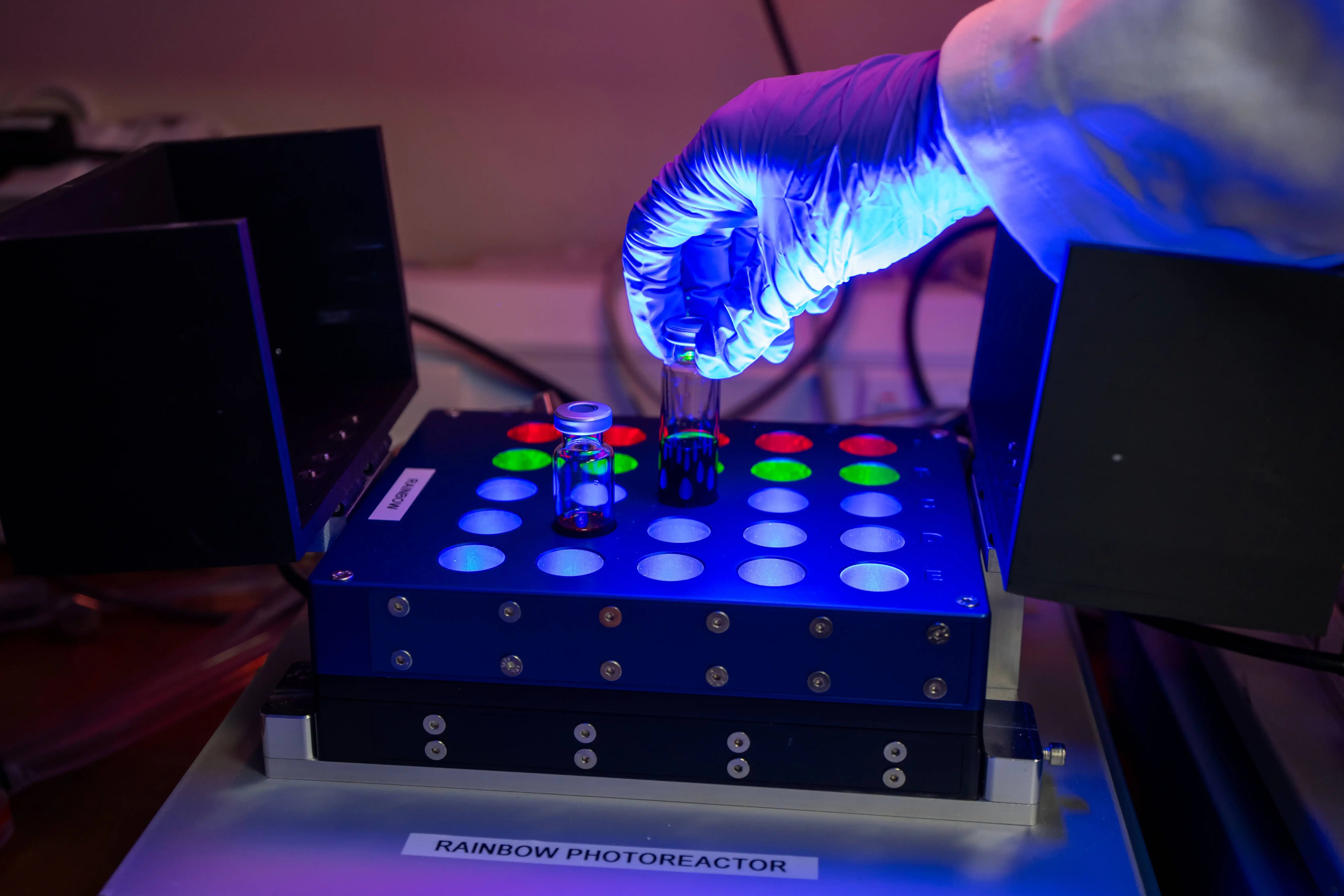
Rather than relying on heavy metal catalysts, the chemistry is powered by an LED lamp at ambient temperature. When activated, it triggers a self-sustaining chain process that forges new carbon–carbon bonds under mild conditions and without toxic or expensive chemicals.
In practical terms, this means chemists can make targeted changes late in the development of a new or existing drug rather than dismantling and rebuilding complex molecules from scratch – a process that can otherwise take months.
“We’ve found a new way to make precise changes to complex drug molecules, particularly ones that have been exceptionally difficult to modify in the past,” said David Vahey, first author and a PhD researcher at St John’s College, Cambridge.
“Scientists can spend months rebuilding large parts of a molecule just to test one small change. Now, instead of doing a multistep process for hundreds of molecules, scientists can start with their hit and make small modifications later on.
“This reaction lets scientists make precise adjustments much later in the process, under mild conditions and without relying on toxic or expensive reagents. That opens chemical space that has been hard to access before and gives medicinal chemists a cleaner, more efficient tool for exploring new versions of a drug.”
Fewer steps mean fewer chemicals, less energy consumption, a smaller environmental footprint and significant time savings for chemists. This highly selective reaction lets scientists make precise adjustments much later in the process. That matters enormously in drug development, where even a minor structural tweak can significantly affect how well a medicine works, how it behaves in the body, or how many side effects it causes.
“This is a new way to make a fundamental carbon–carbon bond and that’s why the potential impact is so great”
The Cambridge breakthrough tackles one of the most fundamental steps in that process: forming carbon–carbon bonds, the links that underpin everything from fuels to complex biomolecules.
The method is highly selective, meaning it can alter one part of a molecule without disturbing other sensitive regions – what chemists call “high functional-group tolerance”. That makes it particularly suited to late-stage optimisation – a key part of modern medicinal chemistry, where scientists fine-tune molecules to improve how drugs perform.
By avoiding heavy metal catalysts, hazardous conditions and reducing the need for long synthetic sequences, the reaction could also dramatically cut toxic chemical waste and energy use in pharmaceutical development, which is an increasing priority as the industry seeks to reduce its environmental footprint.
Vahey is a member of Professor Erwin Reisner’s research group at Cambridge. Reisner’s group is known for developing systems inspired by photosynthesis, using sunlight to convert certain types of waste, water and the greenhouse gas carbon dioxide into useful chemicals and fuels.
Reisner, Professor of Energy and Sustainability in the Yusuf Hamied Department of Chemistry, lead author of the paper, said the importance of the latest work lies in expanding what chemists can do under practical conditions while developing greener manufacturing methods.
“This is a new way to make a fundamental carbon–carbon bond and that’s why the potential impact is so great. It also means chemists can avoid an undesirable and inefficient drug modification process.”
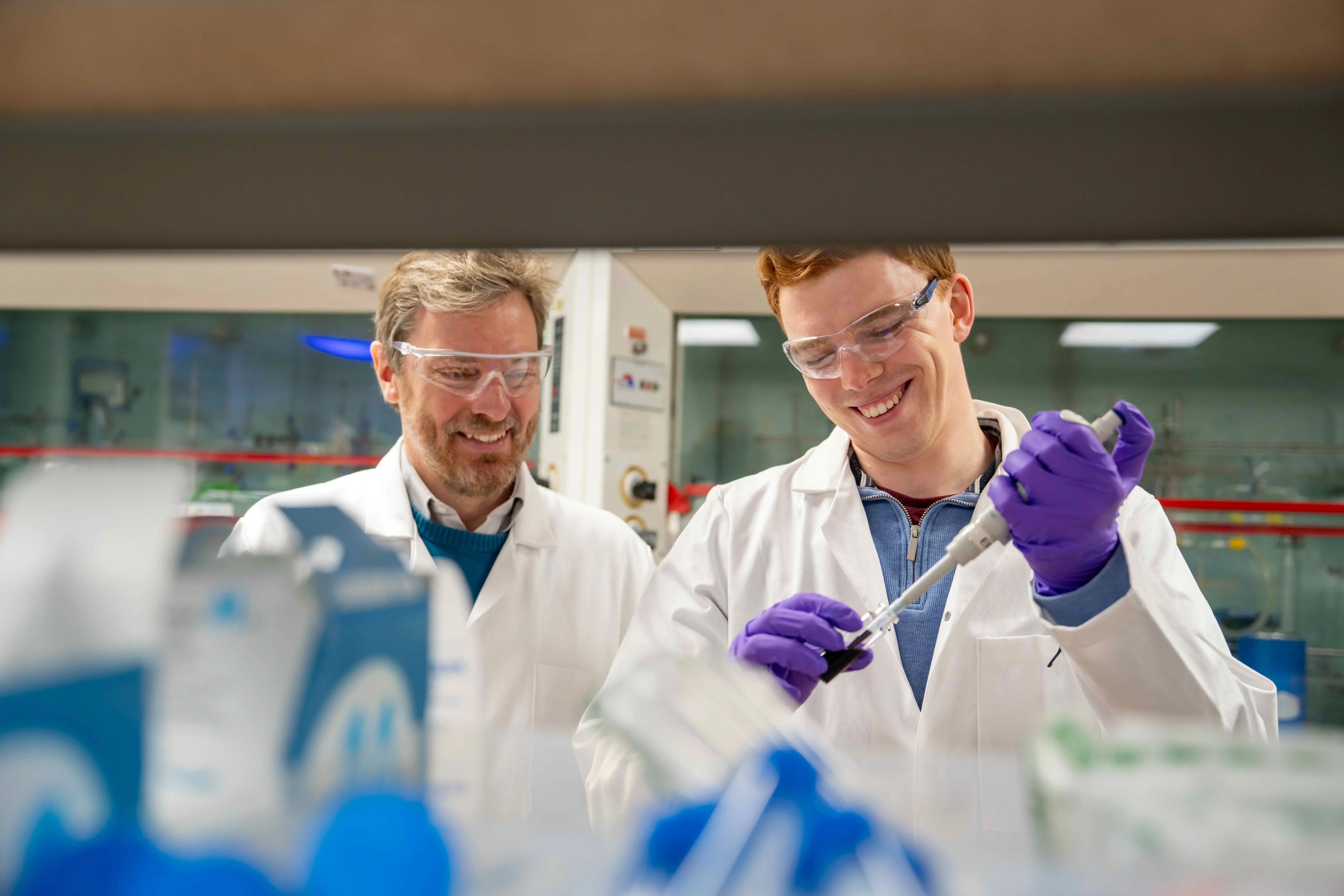
The team demonstrated the reaction across a wide range of drug-like molecules and showed it could be adapted to continuous-flow systems increasingly used in industry. Collaboration with AstraZeneca helped test whether the method could meet the practical and environmental demands of large-scale pharmaceutical development.
“Transitioning the chemical industry to a sustainable industry is arguably one of the most difficult parts of the whole energy transition,” explained Reisner.
And the breakthrough came from a laboratory setback – like some of science’s most famous discoveries, from X-rays and penicillin to Viagra and modern weight-loss drugs.
“Failure after failure, then we found something we weren’t expecting in the mess – a real diamond in the rough. And it is all thanks to a failed control experiment,” Vahey said.
He had been testing a photocatalyst when he removed it as part of a control test and found the reaction worked just as well, and in some cases better, without it.
At first, the unusual product appeared to be a mistake. Instead of discarding it, the team decided to understand what it meant. Reisner said the breakthrough depended not just on chemistry, but on judgement.
“Recognising the value in the unexpected is probably one of the key characteristics of a successful scientist,” he said.
“We generate enormous amounts of data, and increasingly we use artificial intelligence to help analyse it. We have an algorithm that can predict reactivity. AI helps because we don’t need chemists to do endless trial and error, but an algorithm will only follow the rules it has been given. It still takes a human being to look at something that appears wrong and ask whether it might actually be something new.”
“In the moment, choosing to investigate rather than ignore is where discovery happens”
In this case, it was Vahey who recognised its significance and investigated further.
“David could have dismissed it as a failed control,” Reisner said. “Instead, he stopped and thought about what he was seeing. That moment, choosing to investigate rather than ignore it, is where discovery happens.”
Once the team had mapped the underlying chemistry, they brought in machine-learning models – developed in collaboration with Trinity College Dublin – to predict where the reaction would occur on entirely new molecules that had never been tested in the lab.
By learning the patterns from established chemistry, AI could effectively simulate reactions before they were run, helping researchers identify the most promising candidates faster and with far less trial and error. The result is a tool that doesn't just work in the lab but could actively help scientists develop new drugs more quickly in the future.
For Vahey, it’s providing researchers with a vital new tool in the toolbox of drug discovery and development.
He said: “What industry and other researchers do with it next – that’s where the future impact lies. For us, the lab is mostly average to bad days. The good days are very good days.”
Reisner added: “As a chemist, you only need one or two good days a year – and those can come from a failed experiment.”
David Vahey et al, Anti-Friedel–Crafts alkylation via electron donor–acceptor photoinitiation, Nature Synthesis.
X-rays (1895) Wilhelm Conrad Röntgen discovered X-rays while experimenting with electrical currents in glasstubes. He noticed a nearby screen glowing unexpectedly, revealing a new form of radiation that allowed doctors to see inside the human body without surgery.
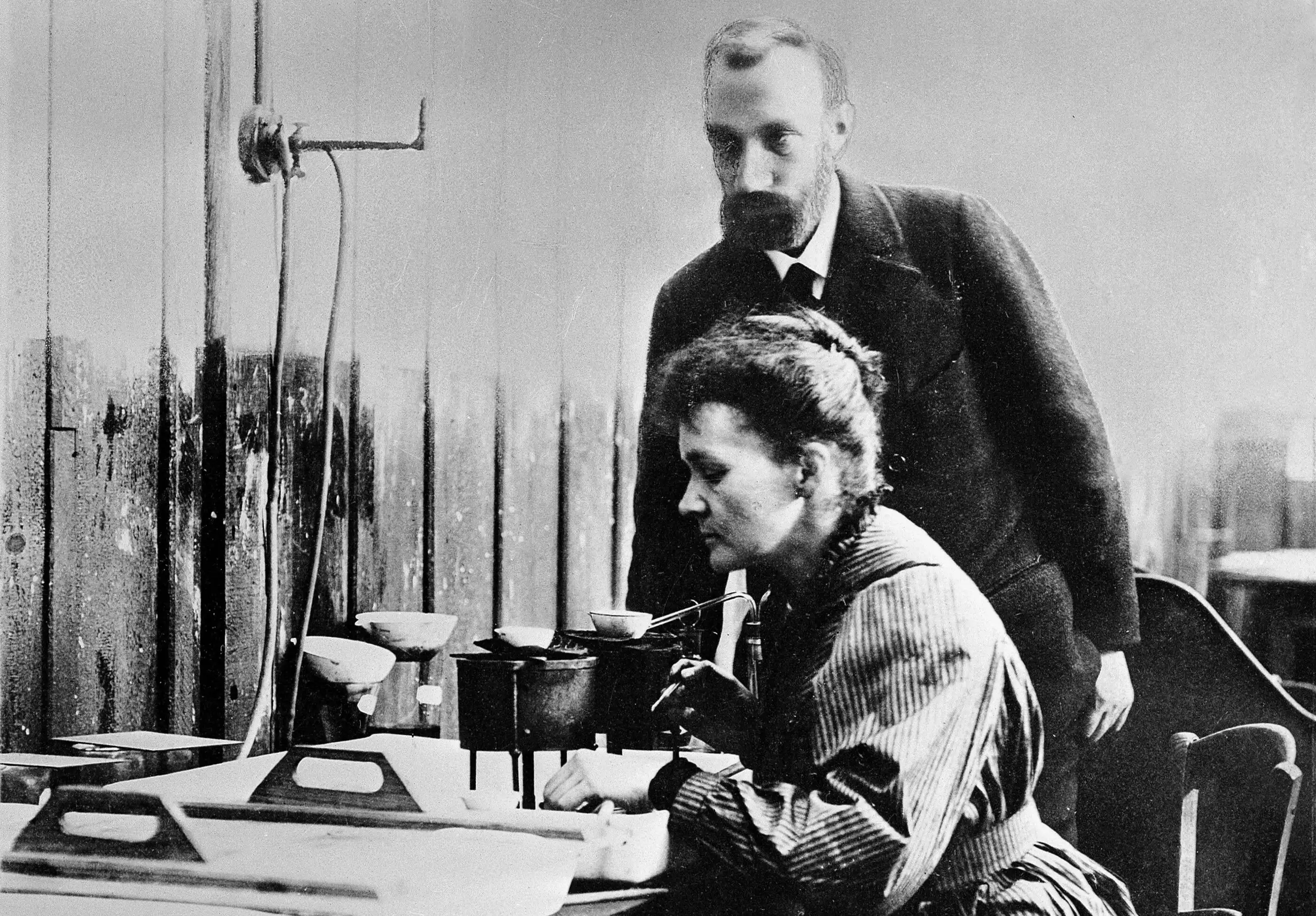
Radioactivity (1898) Marie Curie discovered that certain uranium minerals emitted far more radiation thanuranium alone could account for. The unexpected findings led to the identification of polonium and radium and laid the foundations of modern nuclear physics and chemistry.
Vulcanised rubber (1839) Charles Goodyear discovered vulcanisation when a mixture of natural rubber and sulphur was accidentally dropped onto a hot surface. Instead of melting, the material became durable and elastic. The process made rubber practical for industrial use and later enabled the development of tyres and countless other products.
Penicillin (1928) Discovered by Alexander Fleming, penicillin was found when mould accidentally contaminated a laboratory dish and killed nearby bacteria. It became the world’s first widely used antibiotic and transformed modern medicine.
Teflon (1938) Chemist Roy Plunkett accidentally created Teflon while experimenting with refrigerant gases. The unexpected material turned out to be extremely slippery and heat-resistant, leading to its use in nonstick cookware and industrial applications.
Super glue (1942) Harry Coover was trying to develop clear plastic materials when he instead produced a substance that bonded instantly to almost anything. The product, later marketed as super glue, became widely used in households, industry, and medicine.
LSD (1943) Swiss chemist Albert Hofmann accidentally absorbed a small amount of a compound he had synthesized and experienced its powerful psychological effects. The substance, lysergicacid diethylamide (LSD), later became important in neuroscience research and controversial in popular culture.
Pulsars (1967) As a graduate student analysing radio telescope data, Jocelyn Bell Burnell noticed a series of regular radio pulses that were initially thought to be interference. The signal proved to be the first evidence of pulsars, rapidly rotating neutron stars, opening a new field in astrophysics.
Viagra (1990s) Researchers at Pfizer were testing a drug for angina when trial participants reported anunexpectedly solid side effect. The compound was later developed into Viagra,now widely prescribed for erectile dysfunction.
Weight loss injections (2021) Researchers developing new treatments for Type 2 diabetes found that some drugs mimicking the hormone GLP-1 also led to substantial weight loss in patients. Medicines such as Ozempic and Mounjaro, originally meant to treat diabetes, were later developed for obesity treatment, marking a major shift in medical approaches to weight management.