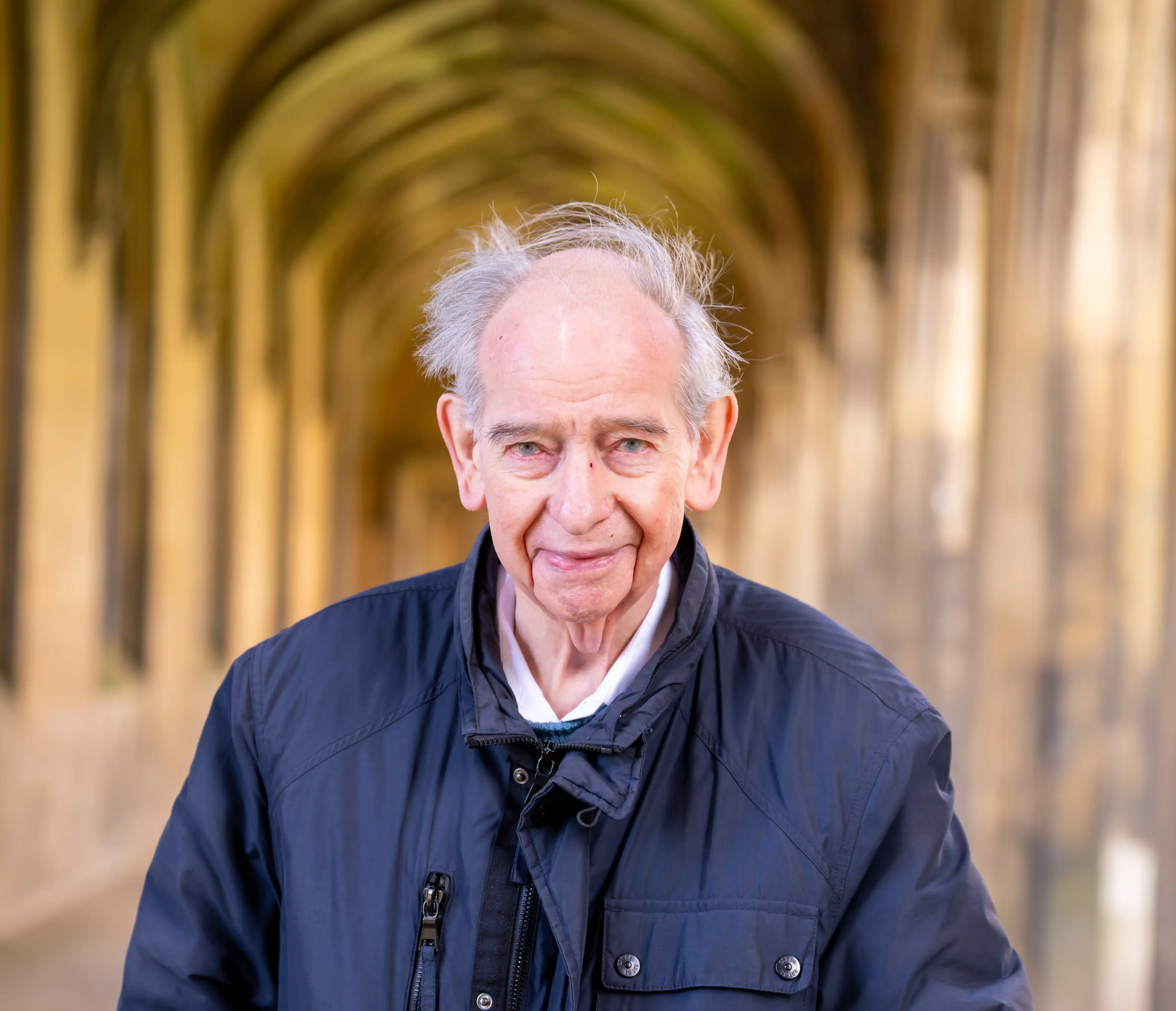
Nobel Laureate Professor Philippe Aghion visited St John’s College just ten days after he won the world’s most prestigious prize in economics.
The researcher was invited to Cambridge to give The Alfred Marshall Lectures at the Faculty of Economics. Aghion was named as this year’s joint winner of the Nobel prize in economics with Joel Mokyr and Peter Howitt on Monday 13 October.
The trio were honoured for their research into the impact of innovation on economic growth and how new technologies replace older ones, a key economic concept known as creative destruction.
The winners represent contrasting but complementary approaches to economics. Mokyr is an economic historian who delved into long-term trends using historical sources, while Howitt and Aghion relied on mathematics to explain how creative destruction works.
In 1992, Aghion and Howitt constructed a landmark mathematical model for creative destruction –when new and better products enter the market and displace older ones. This framework explains how each wave of new ideas raises productivity, often making old skills and firms obsolete, but ultimately boosting prosperity. Aghion and his co-authors said:
“Capitalism is a spirited horse: it takes off readily, escaping control. But if we hold its reins firmly, it goes where we wish”
Their work illuminates practical levers to steer capitalism, ensuring that growth is not only robust but also broadly shared and sustainable for future generations.
Aghion was in Cambridge to deliver the premier academic event at the Faculty of Economics –The Alfred Marshall Lectures. The Lectureship was established in 1932 in memory of St John’s alumnus and Fellow Alfred Marshall, arguably the founder of modern economic science and undisputedly one of its pioneers.
The objective of the lectures is to attain Professor Alfred Marshall’s own vision for economics education in Cambridge, as articulated in his words, ‘to increase the number of those, whom Cambridge sends out into the world with cool heads but warm hearts, to discover how far it is possible to open up to all the material means of a refined and noble life’.
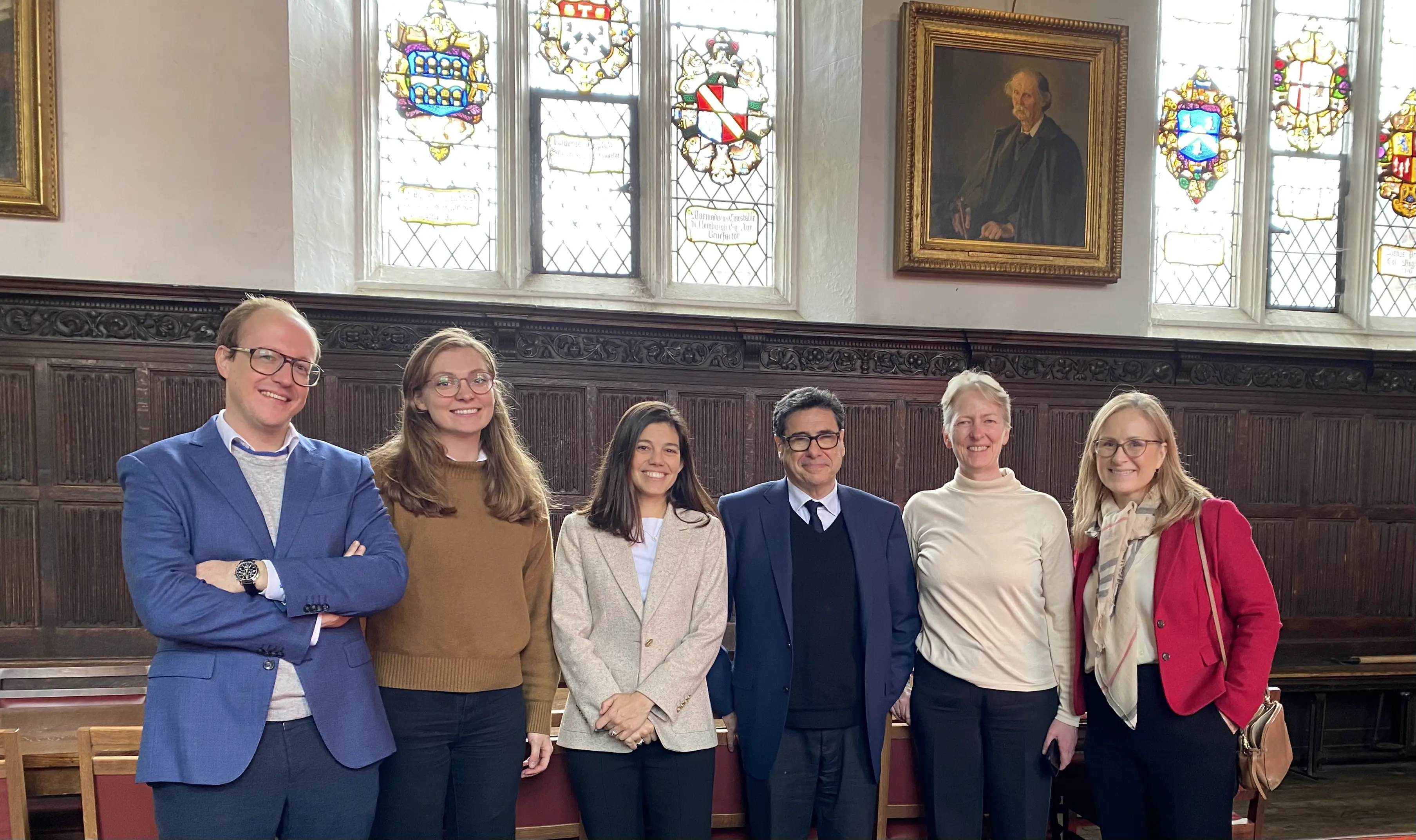
Professor Meredith Crowley, St John’s Fellow, College Lecturer and Director of Studies in Economics, hosted Aghion’s visit to St John’s on Thursday 23 October 2025. Aghion was welcomed to St John’s by Heather Hancock, Master, before he had lunch with a group of academics and posed for a photograph with Alfred Marshall’s portrait in Hall.
Professor Crowley, Deputy Chair of the Faculty of Economics, said: “Professor Aghion delivered two lectures to a standing-room-only crowd of ½ñÈճԹÏ that overflowed the balconies of Lady Mitchell Hall.
“His animated lecture on innovation and creative destruction as the forces behind sustained economic growth was punctuated with anecdotes about his research collaborators that filled the hall with raucous laughter"
“More seriously, he discussed competition and industrial policy and his thoughts on the potential for spurring future innovation in a more equal society by bringing the strengths of European social policy and American innovation policy together.”
John Hassler, Chair of the Committee for the Prize in Economic Sciences, said: “The laureates’ work shows that economic growth cannot be taken for granted. We must uphold the mechanisms that underlie creative destruction, so that we do not fall back into stagnation.”
Philippe Aghion is Professor at Collège de France and INSEAD, Paris, and The London School of Economics and Political Science.
Alfred Marshall believed that the purpose of Economics is to improve human welfare based on analytical understanding.
His philosophy continues to guide teaching today: St John’s ½ñÈճԹÏ learn to use the analytical framework of Economics to think about theoretical and real-world issues, developing invaluable skills in assessing economic evidence and reasoning.