Every year an estimated 10,000 women die and 200,000 babies are stillborn due to pregnancy complications caused by malaria, with 95 per cent of cases occurring in Sub-Saharan Africa.
This overlooked area of research has now been thrown a lifeline by a £2 million Wellcome Trust Discovery Award made to Professor Amanda Sferruzzi-Perri, Professor in Fetal and Placental Physiology and Fellow of St John’s College, University of Cambridge, and project colleagues in the UK, Kenya and Germany.
“Placental malaria is a hidden disease of pregnancy that disproportionately affects parts of the world such as Sub-Saharan Africa, where it is the main cause of fetal deaths or stillbirths and low birth weight, and contributes to mothers dying in pregnancy,” said Professor Sferruzzi-Perri.
“This research grant is an important opportunity to study the impacts of malaria on the placenta and pregnancy outcomes, so new therapies and strategies can be designed to prevent malaria from affecting pregnancies in the future.”
Wellcome Discovery Awards provide funds for established researchers to pursue bold and creative ideas to deliver shifts in understanding related to human life, health and wellbeing.
The project being co-led by Professor Sferruzzi-Perri has secured funding for five years and will see the opening of a Placenta Research Centre in Kenya, including the training of new scientists in the field.
Professor Sferruzzi-Perri and her group at Cambridge’s Loke Centre for Trophoblast Research will work with teams at Mount Kenya University in Kenya, The London School of Hygiene and Tropical Medicine, and Max Delbrück Center for Molecular Medicine in the Helmholtz Association, Berlin, Germany.
Malaria, caused by Plasmodium parasites transmitted by mosquitos, is particularly difficult to diagnose in pregnant women because they are often asymptomatic and traditional blood tests may fail to detect the infection. In many cases, it can only be reliably identified through examining the placenta after delivery.
“If women catch malaria in pregnancy, the infected red blood cells stick on, and accumulate in, the placenta. It’s hard to detect and doctors may only realise something is wrong when the fetus isn’t growing enough or the mother reports less fetal movements,” said Professor Sferruzzi-Perri. “The placenta protects the mother and the fetus from malaria – in fact it’s rare for the parasite to reach the fetus – but both mum and baby’s lives are at risk.”
The project will generate crucial data and improve research capacity in Kenya – not only for understanding and mitigating against placental malaria, but for other pregnancy diseases too.
“If effort is put into diseases like malaria, we wouldn’t have these conditions at all, so this research will make a massive difference to the lives of many people”
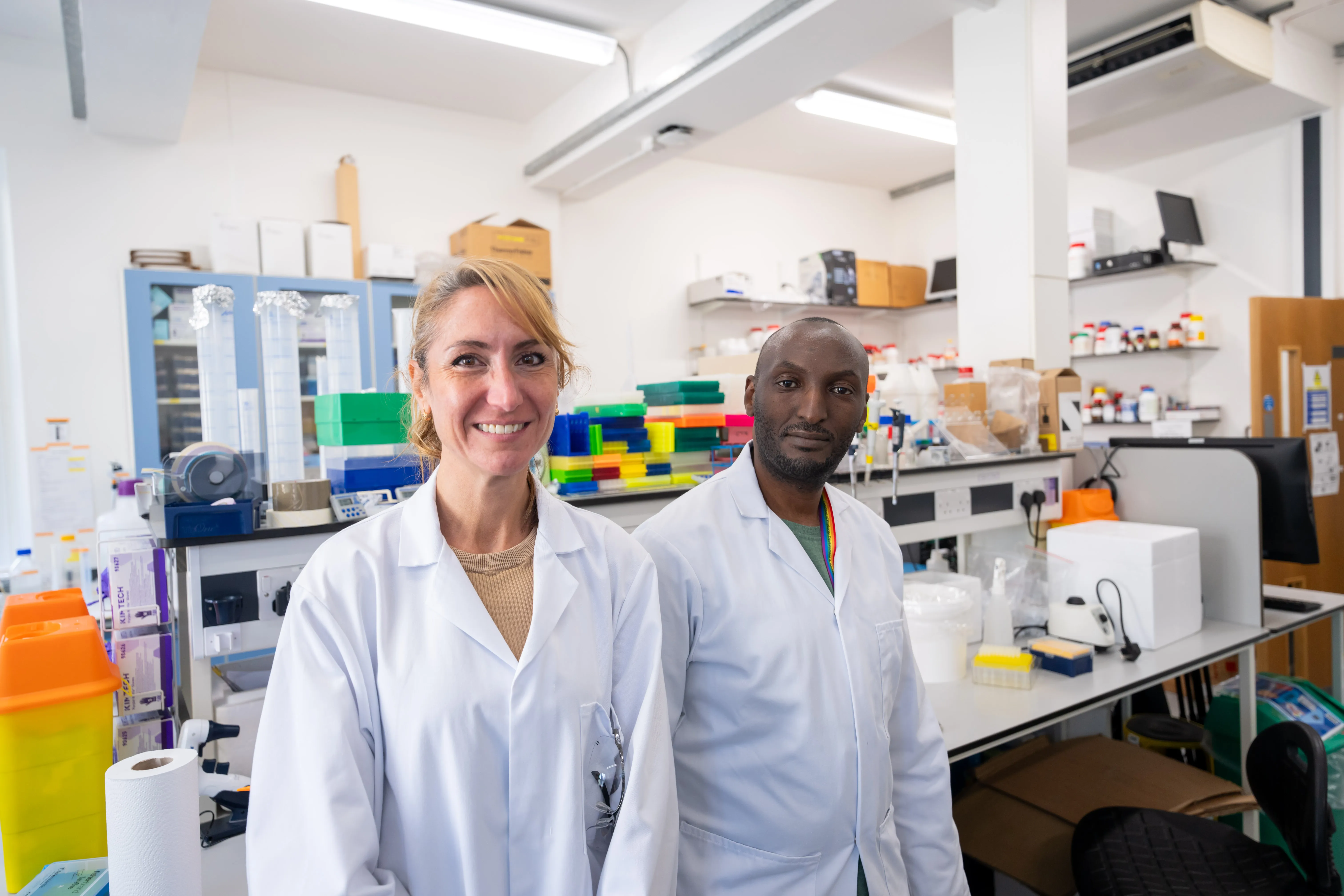
Professor Jesse Gitaka, lead applicant at Mount Kenya University, said: “This award represents a watershed moment, shifting the epicentre of discovery to the front lines of the crisis. For generations, we have witnessed the toll of placental malaria, but the tools to dismantle it have been elsewhere.
“With the establishment of the Placenta Research Centre, we are not simply providing samples; we are building a powerhouse for African-led science.”
His team will provide the data and biological samples to the scientists in Europe, experts in areas such as parasite genetics, gene profiling and placental biology.
“The past years have seen massive advancements in the development and application of high-resolution methods in biomedical research,” said co-applicant Dr Emanuel Wyler, of Max Delbrück Center for Molecular Medicine. “It is now the right time to apply them to globally understudied diseases such as placental malaria.”
Professor Taane Clark, co-applicant at The London School of Hygiene and Tropical Medicine’s Malaria Centre, said the project will uncover critical malaria parasite factors driving adverse pregnancy outcomes. “These findings will inform the development of much-needed diagnostics and vaccines.”
Using ‘mini-placentas’ grown in their lab, Professor Sferruzzi-Perri and her team will study important biological changes that lead to the disease in the placenta, which can be affected by other things such as malnutrition and adverse environments.
“If effort is put into diseases like malaria, we wouldn’t have these conditions at all, so this research will make a massive difference to the lives of many people,” added Professor Sferruzzi-Perri. “It’s been extremely rewarding to visit clinicians, healthcare workers, researchers and women and their families in Kenya to see the work they are already doing and the impact it will make.”
Professor Sferruzzi-Perri, who is also a College Lecturer in Physiology and Reproductive Biology at St John’s, is leading a new interdisciplinary Women’s Health Network at the .